This Week in Weather — April 19, 2026: Lyrids and Severe
A quieter severe-weather stretch opens the door to dark skies for the Lyrid meteor shower peak, while the Plains watches the next shortwave and the Northeast finally shakes off its cool pattern.
Welcome back to the Weekly Dispatch. After a loud stretch of mid-April storm activity the pattern takes a short breather this week, which opens up a rare treat overhead. Here is what we are watching.
Looking Up: The Lyrids Hit Their Peak
The Lyrid meteor shower peaks the night of Tuesday April 21 into Wednesday April 22, and this year the timing is genuinely favorable. The moon is in a waxing crescent phase sitting at roughly 25 percent illumination by peak night, and it sets well before the radiant in Lyra climbs toward its best viewing window around 3 to 5 AM local time. Dark skies from a dozen or so meteors per hour is a modest show compared to the Perseids or Geminids, but the Lyrids are known for producing occasional bright fireballs -- and you do not need fancy gear, just a clear sky away from city lights and a little patience.
A few practical notes if you are planning to watch:
- Let your eyes dark-adapt for 20 to 30 minutes. No phone screens.
- Face roughly northeast and look about halfway up the sky. The meteors can appear anywhere, so wide field of view wins.
- The radiant rises late, so the best window is the predawn hours of Wednesday.
Cloud cover is the wild card. A shortwave trough tracking across the Great Lakes on Tuesday may leave behind broken cloud decks for the Northeast and Ohio Valley. The southern Plains and the Desert Southwest look cleanest for Tuesday night into Wednesday morning.
Looking Back: Severe Weather Takes a Breather
Last week's severe weather push -- capped by the Plains supercell day on Wednesday that we broke down in its own post -- has given way to a quieter pattern. The storm system that drove that event lifted into Canada and the jet has retreated north, shutting down the robust shear profiles that fed discrete rotating storms.
That does not mean the severe threat is off. The Storm Prediction Center is eyeing another shortwave lifting out of the southern Rockies Thursday into Friday, which would bring a renewed chance of strong-to-severe storms across Kansas, Oklahoma, and north Texas. The ingredients will not be as robust as last week -- the moisture return off the Gulf is lagging -- but a day-one risk area would not surprise anyone.
For the Northeast and Mid-Atlantic, the big story is simply warmer air finally winning the fight. Highs in the 70s reach New York City by Wednesday for the first time this spring.
Ground Check: Allergies, Earthquakes, and the Sun
A few quieter items worth flagging:
- Tree pollen is peaking across much of the central and eastern US right now. Oak, birch, and maple are running high-to-very-high in most reporting stations. If the "Pollen" card on your 16-Bit Weather dashboard has been lit up, this is why. Expect grass pollen to join the party in the next two weeks.
- Seismic activity on the West Coast has been business-as-usual. USGS logged the usual cluster of M2-to-M3 events along the San Andreas and in the eastern Sierras over the weekend, nothing unusual. The Earth Sciences dashboard is the place to watch if that changes.
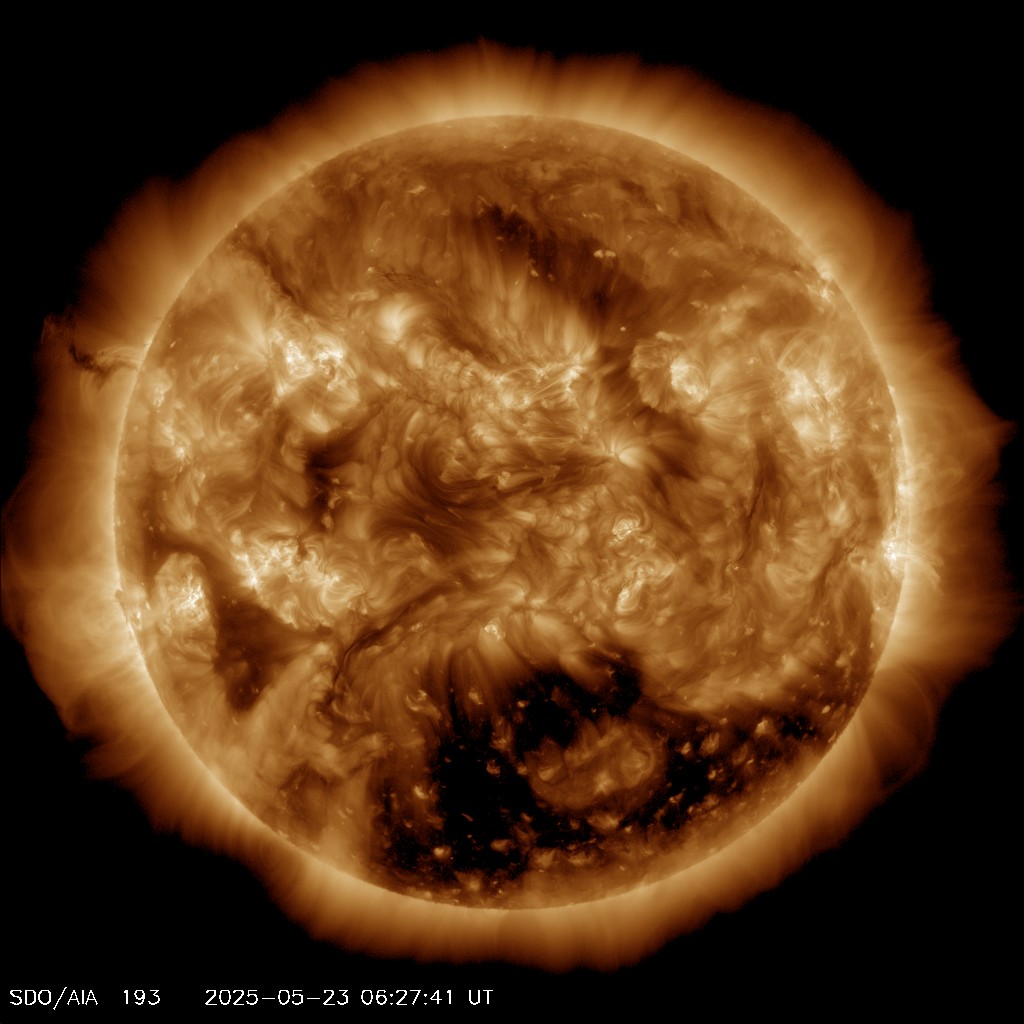
- Solar activity remains in the quieter stretch that started in early April. The 10.7 cm flux has been hovering in the 140s, Kp index has not exceeded 3 all week, and there are no earth-directed CMEs in the pipeline. Aurora chasers, sorry -- this one is a waiting game.
April 22: Earth Day
Earth Day lands on Wednesday this year, which pairs nicely with the Lyrid peak the same morning. If you teach, run a community group, or just want to mark the day with your kids, the intersection of "look at the sky" and "take care of the planet under the sky" is an easy and memorable hook. The American Meteorological Society and NOAA both publish free classroom material if you want ready-made content -- worth a search.
Bottom Line
- Clear your Tuesday night calendar if you have access to dark skies. The Lyrid peak with a cooperative moon is the best astronomical opportunity of the month.
- Watch the SPC outlooks Thursday and Friday. The southern Plains get their next shot at severe weather, though not at last week's level.
- Spring is winning everywhere. Warm air finally reaches the Northeast, pollen is peaking, and the sun angle is doing the heavy lifting on heating no matter what the jet stream does.
Stay weather aware. We will be back Wednesday.